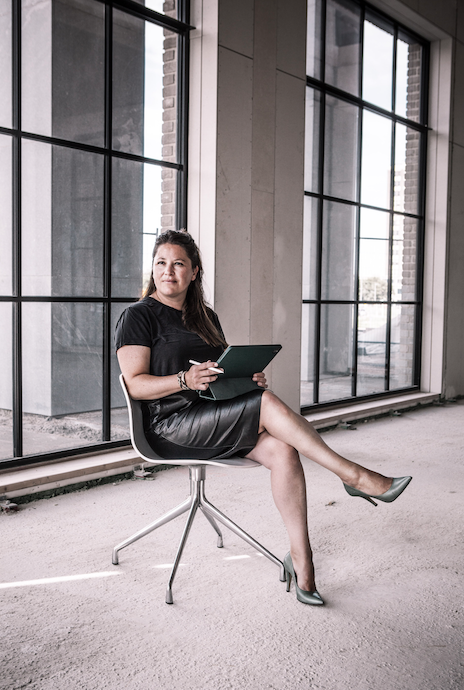
Female Internet Heroes Interview: Penny Power

Penny Power, co-founder of Ecademy
Every week we publish an interview with one of our female internet heroes. This is an opportunity for you to MEET interesting women, READ about their WORK, THINK about how they PLAY the internet industry and see how you MATCH them. Be inspired!This monday: Penny Power.
“The internet really is all about the people and about the community and all about how people are engaging and understanding one another” says Penny Power, co-founder of Ecademy. Ecademy is a social community and a business network, which since its founding in 1998 has grown to an impressive level.
But Ecademy is much more than that; it is a place for people to work together, to share expertise and skills, get business advice or emotional support, advertise their business and attend network events. Since founding Ecademy in 1998, the network has grown to an impressive 320,000 members all over the world. Penny has had offers to sell, but she won’t consider this unless the partnership is a good choice for the members. Thenextwomen interviewed Penny to find out why she is holding on to Ecademy.
-
Can you tell me a little about yourself?
twit or fit launches at twinterval

Twit or Fit? (pic: CC Annie Mole)
A month of Twittering between Zuzanna Pasierbinska-Wilson of collaboration start-up Huddle.net and Nic Halstead of UK RSS aggregator fav.or.it, Twit or Fit was launched at the Christmas twitter bonanza Twinterval. Created after Huddle marketing manager Zuzanna was looking for entrants to a light hearted Drink Tank beauty pageant for UK start-ups, Nic spurned the idea of a hot or not Twitter.And so twit or fit was born.
The rules are straight forward. You must already be a twitter, and must upload the same picture to your twit or fit profile.
worldeka - one world, our world, our funny, crazy beautiful world

Worldeka January Launch
Due to go live January 2009, Worldeka - meaning ‘one world’ in Sanskrit - is a collaborative platform designed to help people connect and create change. Set up by brother and sister act Sophie and Charlie Cox, they have spent the last few months pitching for the likes of techfluff.tv and tech crunch.
Their vision is for a social network with a conscience where people can join charities, watch videos, launch projects and interact with other inspiring people. The site will bring pioneering humanitarian, environmental and political development to the web, providing the means to improve the world in one tiny place. WorldEka is a one-stop shop for like-minded people to come together and collectively bring about change - the sum of the parts is greater than the individual. Read more
a notebook that does not cost the earth
Never one to miss an environmentally friendly gadget, this week’s tech article looks at the Asus EcoBook. Spawned from its predecessor the Asus U2, its chassis is made entirely from bamboo panelling. Through its innovative use of materials, it would appear Asus is attempting to reduce the impact technology has on the environment. The material is the right one for the job: Not only is it found in abundance, it grows at speed and is biodegradable at the end of its life.Contrary to what you might think of such a laptop, Asus claims it to be robust in design and even that the laptop has accompanied (and survived) an expedition up Mount Everest. Indeed in addition to its green casing, it also has a Solid State Drive making it resilient to bumps and prangs. It is interesting, however, to see the website make no mention to the power requirements of the notebook leaving me sceptical to its true green credentials.
Although the laptop looks very cool and would definitely be a conversation starter in any situation - be it business or social - I find it hard to believe that a laptop whose only offering is a bamboo chassis is really all that sustainable.
For those interested in the specs, check out the Asus website.
Success for the ‘notonthehighstreet’ women
The founders of Not on the High Street have enjoyed a successful first two years of trading, in which they have found themselves winners of numerous start-up awards. These accolades have included: Grazia O2 X regional winner 2007, Startups Women in Business; Young Guns 2008; HSBC Start-up Stars; Marie Claire 23 Women; Startups 100; The 50 Best E-Boutiques and MSN Best Shopping Website.
Holly Tucker and Sophie Cornish have truly been unstoppable. Since launching in 2006, the site has grown from 100 businesses to over 750, selling everything from fashion to home ware, fragrances and jewellery. Funding has come first from Spark Ventures in 2007, and in August 2008, another 1 million pounds was raised from Venrex. At that time, the team was enforced with business development experts Giovanna Latimer and Serena Coulson, formerly of Advent. Founders and majority shareholders Tucker and Cornish built the site, driven by both a passion and a frustration.
Internet TV: Lara Ankersmit of Telegraaf.nl (in Dutch)
Lara Ankersmit, online publisher at Telegraaf.nl, talks in SHE about the strategy of the most popular website of one of the national daily magazines. About 700.000 unique visitors a day read mainly headlines, the financial telegraph, gossip page Prive and the women channel. With Hyves she has developed a cross media strategy to increase the reach of the site to a younger audience.
SHE, (a programme of Blueshots) sponsored by Bizner Bank, features interviews with women entrepreneurs, female internet heroes and discuss marketing to women cases. It is presented by Marianne van Leeuwen of Sisteract and Simone Brummelhuis of TheNextWomen.
Microsoft and BigAmbition’s event for more Girls into IT has great results
December 2008, saw Microsoft and the not-for-profit job advice website, BigAmbition, collaborate on the BigAmbition Event – Girls in IT. Aimed at inspiring young ladies into a career in IT, the event has a mission to raise the profile of computer based professions, whilst dispelling the popular myth that IT is only for geeks. And it worked: When asked at the beginning of the event ‘would you consider a career using technology?’ 33% of the girls responded with a yes when first asked, however when they were asked at the end of the event 81% responded yes.
An impressive line-up of female speakers included Anouska Wilson of IBM, Naomi Climer of Sony, Cary Marsh of MYDEO, Helen Cook of SEEDA, Gina Fegan of SE Media Network and Hermione Way of Newspepper. The event began with a panel discussion in which the women explained what made IT fascinating for them, the paths they had taken and the decisions that had led them there.
Expert interview: 13 questions on Funding & Pitching (part 2)
Andrea Cockerton, founder of Mudhut Consulting, the Cambridge-based venture market consultancy works with entrepreneurs of both start-ups and more established SME’s on pitching for business critical investment or deals. For The NextWomen she answers questions on funding & pitching. This is part 2.
Is it true that you can better ask for more than you need than exactly the amount or less?
In my view you need to ask for the right amount of money for what you realistically - with ambition - believe your business can achieve and needs to do so. However, you need to be canny about the fact that market forces, economic trends, competition and so on and so forth can all impact on your targets. An investor needs to see that you are not blinkered and are considering all these things - that you are focussed but flexible. Having said all that, often companies do seem to underestimate exactly how much
money they will need…
Is there a rule for what an angel investor seeks as shareholding?
Not to my knowledge, but of course they are likely to want as much as they can get! Generally companies want to give away less, and investors want more than is on the table. Beware - if you have a ludicrous valuation, investors could well walk away without even discussing it. Be sensible and
get practical advice. There are many different ways how an investor valuates a business.
Is money more or less important than expertise?
They each have their value, and at times exceed each other in importance. But you can do without neither.
How many times should you pitch before you are successful?
Expert interview: 13 questions on Funding & Pitching (part 1)
Andrea Cockerton, founder of Mudhut Consulting, the Cambridge-based venture market consultancy works with entrepreneurs of both start-ups and more established SME’s on pitching for business critical investment or deals. For The NextWomen she answers questions on funding & pitching. This is part 1.
When should a entrepreneur start seeking finance? At what stage?
Definitely not when they’ve run out of cash!! Going to investors at too late a stage is a risky strategy. Better is to look at the long term objectives and aspirations of the business and plan the fundraising sensibly into this long term strategy. In terms of order, many entrepreneurs try friends and family first, then angels, and then VCs… not forgetting of course any grants or soft loans accessible on the way. Also - don’t underestimate the time it takes to secure funding. This can be anything between a couple of months and up to nine months, or sometimes even a year.
When an entrepreneur wants to raise finance, what should she prepare?
A business plan with a robust, efficient executive summary and well-considered financials, and a well formed pitch - which should be deliverable either in the form of a brief summary (elevator pitch), or in
terms of a detailed presentation outlining the full commercial opportunity the business presents.
What are the most important 3 things she should mention in her pitch?
Rising female internet TV hero: Hermione Way
Launched December 2008, Techfluff.tv is the brain child of Hermione Way, journalist and founder of Newspepper.com and named one of the rising stars of the Spectator. Weekly instalments showcase entrepreneurs, start ups, answers to tweets, events and news - straight from the London tech scene and all with a little bit of fluff. And you can vote for het at the Shorty Awards.
The format at Techfluff sees Hermione reading the headlines as the beautiful news presenter, before morphing into Lara Croft’s younger sister as the News Raider in what’s hot and what’s not. Start ups then give escalator pitches lasting – yes you’ve guessed – the time taken to reach the top of an escalator. Sadly no entrepreneur has so far seen the virtue of running back down – not a good idea considering the team were politely asked to move along from their first film location in Leicester Square tube station. Finally the closing minutes are filled with answers to tweets, Facebook and YouTube questions from an expert of the week and a summary of upcoming tech events.
Ten minutes in length, episodes fly along with speeded up skits, delivering content with humour. Although still in the early stages the first four episodes have had an impressive line up of experts - Michael Smith, founder of Firebox; Mike Butcher, editor of TechCrunch,